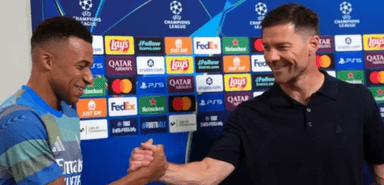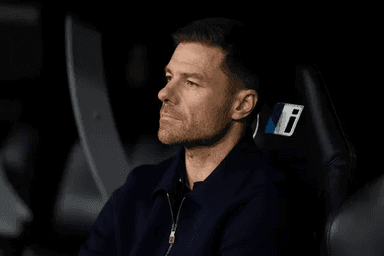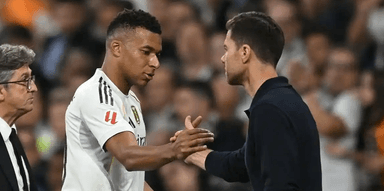


Real Madrid has officially announced that it has mutually agreed with head coach Xabi Alonso to end his tenure at the club.
On the surface, the team showed improved form in the Spanish Super Cup final, but this was not enough to justify Xabi Alonso continuing as Real Madrid’s manager. Weeks of sustained physical exertion, the team’s poor fitness performances, frequent injury occurrences, strained relations with several core players, and the coaching staff’s failure to send out clear signals of turning things around eventually prompted Real Madrid to hastily terminate the cooperation ahead of schedule.
This project, originally launched last June with a contract running until June 30, 2028, already showed signs of wavering in early December. Especially after the match against Celta Vigo, talks of Alonso’s unstable position loomed over the team in almost every subsequent game, with the anxiety peaking right after that fixture.
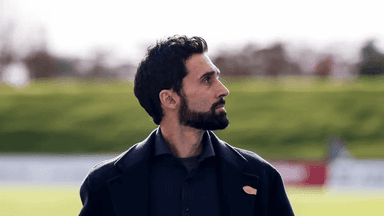
After returning to Madrid from Jeddah, club president Florentino Pérez, general manager José Ángel Sánchez held talks with Alonso, and the three parties reached an agreement to terminate the contract early. Real Madrid has confirmed that Álvaro Arbeloa will take over as manager; he will lead the team for the remainder of the season and at least one full season after that. The current Castilla manager is expected to sign the official contract in the coming days and formally assume the role of first-team head coach.
What was originally seen as a "pass" that would allow Alonso to stay in charge for at least a few more games ultimately turned into a farewell. The defeat against Barcelona became the final straw that broke the camel’s back, but the decision had in fact been brewing since early December.
In truth, the management’s dissatisfaction with the coaching staff had been evident for some time. The club’s senior executives had clearly demanded changes to the team’s training and match rhythm, particularly regarding physical conditioning management. Real Madrid has been plagued by injuries this season; the latest cases occurred during the team’s stay in Saudi Arabia, with Federico Valverde and Hugo Bueno successively added to the injury list, further fueling internal anxiety.
To address this, the club has taken the lead in adjusting its medical and fitness system. Earlier, Miko Nišić has rejoined Real Madrid’s medical team, and a more crucial step is the return of Antonio Pintus to take charge of the first-team’s daily training. It is worth noting that during Alonso’s tenure, Pintus was not involved in the players’ physical preparation; he only accompanied the team on some away trips, including the recent journey to Jeddah.
When Alonso took office, he brought in a complete coaching team. The club originally hoped to integrate both Pintus and goalkeeping coach Carlos Lopis into the setup, but in the end, only Lopis remained. Alonso insisted on appointing Ismael Clemente to oversee physical training, a decision that became a major source of subsequent disagreements. Starting from January 13, Pintus will fully take charge of fitness affairs once again and serve as an important pillar for Arbeloa as he embarks on his top-tier coaching career. Previously, Pintus played a key role during the tenures of Zinedine Zidane and Carlo Ancelotti.
In addition, Alonso’s handling of issues related to Vinícius Júnior also failed to help stabilize the situation. In several key recent matches, his behavior on the sidelines stood in stark contrast to that of his early coaching days. Whether in the semi-final against Atlético Madrid or the clash with Barcelona, he had tense moments with Diego Simeone and Hansi Flick respectively, clearly showing signs of anxiety under high-pressure circumstances.
After returning to Madrid, the club’s senior management and Alonso ultimately agreed that their cooperation could no longer continue. Against the backdrop of long-standing accumulated problems, Real Madrid chose to hit the reset button in the middle of the season.