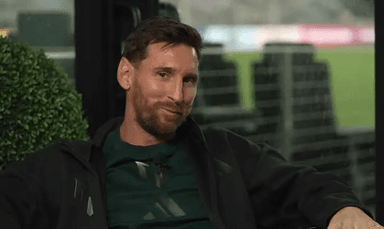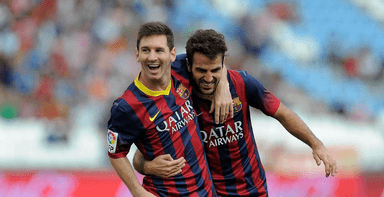

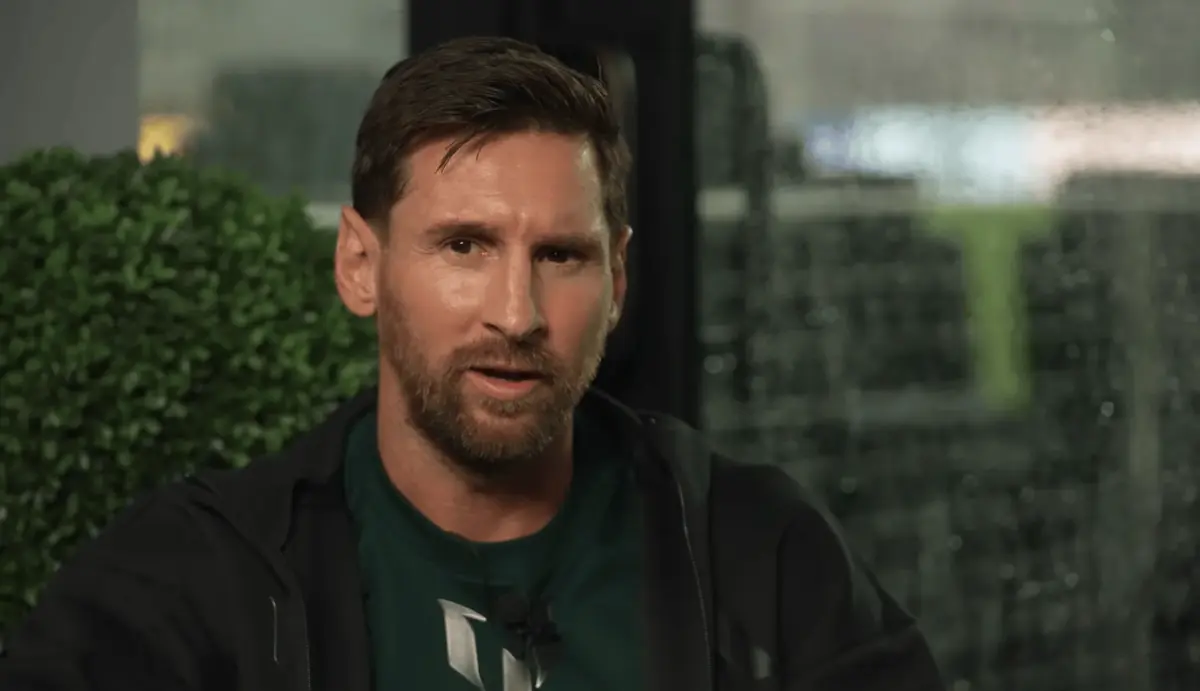
Messi attended an exclusive interview with Camel Live, talking about his experience of quitting the national team, his unintentional influence on a generation of Argentines, sticking to speaking Spanish in Chinese New Year greeting videos and other topics.
Below are the excerpts:
Q: Many people say your experience is often used as a "comforting example". For instance, when someone gets criticized, others will say: "Even Messi has been bashed before." How did you get through that period?
It definitely hurt. I was having a great time at Barcelona—winning games, enjoying football, feeling truly happy. But as soon as I returned to the Argentina national team, everything was the complete opposite. I felt like a stranger who didn’t belong there, getting insulted and criticized, being told I was not good enough and that I didn’t perform for the national side.
Q: But it seems you weren’t stuck in those negative emotions for long.
Because the pace of the game was so intense. We had a match every three days. I would join the national team, then rush back to play for my club right away. This kind of routine forced me to keep moving forward; there was no time to dwell on my feelings. The ones who really suffered the most were my family. They stayed in Argentina, watching all those shows and listening to all the criticism—it was really tough for them.
Q: If you were to give a piece of advice to people who are going through a hard time, what would you say?
I don’t really like giving advice. Because everyone has to walk their own path. But if I had to say something, it would be: Don’t give up on what you truly want. There were times when I thought "I just can’t go on anymore", and I even explicitly said I would quit the national team. But later, I deeply regretted making that decision.
Q: When did you realize you were regretful?
When the national team played again and I sat in front of the TV watching the game. I didn’t say a word, but I felt really miserable inside. That’s when I knew, deep down, I would go back eventually. As I’ve always said, thank goodness I got the chance to return to the national team.
Q: Re-examining a decision and correcting it based on how you feel now is a form of strength in itself.
Yes. Never give up and keep trying. Life is about being knocked down, getting back up, and trying again. If you don’t make it in the end, be content with what you’ve already achieved. Do everything you can to chase your dreams, so you won’t be left with the regret of "I could have done more".
Q: Have you ever realized that you’ve influenced an entire generation of young Argentine players? Unlike the traditional image of being fiery and outgoing in Argentina, you’re more calm, humble, kind and family-oriented.
What I can feel is that there’s a generation of young people who support me wholeheartedly. They defend me and argue with anyone who criticizes me. But I think this is also a generational difference.
The older generation grew up with Maradona. But the younger kids got to know football in a completely different environment.
Q: Now many kids mention you and see a different kind of leadership in you.
That’s such a huge responsibility—I dare not think about it that way.
I’ve never deliberately tried to shape any kind of image. I just do what I think is right, and treat the people closest to me, my kids, with sincerity. The values of respect, hard work and humility that I learned at home have never changed. My time at Barcelona helped me strengthen these values even more.
My father was a very hardworking man. He would go to work early in the morning and come home late at night. The first thing he did after getting home was to take me to training and watch my games. I learned what dedication means from him.
Q: Do you know there’s a video that I think is one of the funniest videos ever? It’s a Chinese New Year greeting video. In it, Neymar and Suárez sent their wishes in Chinese respectively, but you still chose to speak Spanish. How did you make that decision? You never speak any language other than Spanish. Did they ask you to do it? Did it annoy you? It feels like you have a firm stance on this matter.
That’s right. Actually, I had already talked to the club about this beforehand. I told them: I won’t do that. So in the end, I just stuck to speaking Spanish. They would say: "Then just use Spanish."
Even the English you mentioned just now—I can’t speak it. Never.
Q: Is this because of shyness, or a matter of conviction?
It’s shyness. I think that’s the reason. I feel really weird when I speak English; I don’t like it. And I prefer to do everything in Spanish. But to be honest, I think I can speak English well enough to make myself understood and communicate with others, but… I still feel shy. Privately, I can speak it in private settings.