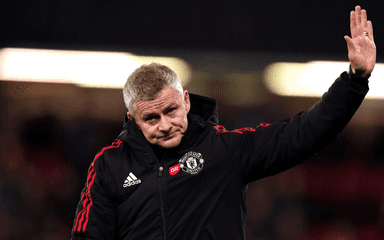


Manchester United officially announced that Ruben Amorim has stepped down from his position as the club's manager, with Darren Fletcher named as the interim boss.
More Details on Manchester United’s Sacking of Amorim
Yes, Manchester United sacking Amorim is certainly a major event, and it has set a shocking tone for 2026. We have seen several managers depart in the past few days, starting with Enzo Maresca’s decision to part ways with Chelsea, and now it is Amorim’s turn at Manchester United. Therefore, it was the club’s management and owners who decided to sack Amorim, and this was a unilateral decision by the club.
This is different from Maresca’s situation: Maresca took the initiative to leave Chelsea, and the club was also dissatisfied with its situation at that time, so the two parties mutually agreed to split. As for Amorim, he publicly stated clearly just 12 hours before being sacked: “I will continue to coach here for another 18 months, and then we will see what happens.” However, Manchester United decided to “act in advance” just 12 hours later. The relationship between Amorim and Manchester United has indeed been very complicated and tense, especially in the past few weeks. Unlike Maresca’s case, the issues with Amorim were not always this severe; although there were some problems between them, things really became tricky, I think, in the past two to three weeks.
You Mentioned the Tense Relationship Between the Club and Amorim. So, What Were the Main Issues?
A key point is also about the transfer market—which is similar to Maresca’s situation, but in a different way. Because this time, Amorim publicly said: “I came to Manchester United as a manager, not a coach.” What he meant was that when he signed for Manchester United in November 2024, he sent a very clear message to the club: “I can come right away, without waiting until the end of the season, but I want to have an impact on this team. I want to decide tactically how we play and what philosophy we should follow to sign new players.”
It is clear that Amorim wanted to play a three-centre-back system. But for Manchester United, it was not easy to support this tactical philosophy in the transfer market and replace a large number of players. Amorim was dissatisfied with this. It became increasingly obvious that Manchester United’s squad configuration could not support the tactical system that Amorim wanted, but the club refused to make further signings to back him up. This was the main reason why the relationship between the two parties became extremely tense. In this winter transfer window, Amorim wanted new players, but Manchester United was unable to push through many of the deals he desired.
Therefore, this relationship became unsustainable. Now, Manchester United will face approximately £10 million in compensation. If we include the wages paid to Sporting CP, the salaries paid to Amorim and his team, as well as the severance pay, the total amount could reach £27 million (until 2027). So, clearly, from a financial perspective, this is also a major problem for the club.
Speaking of Players and the Ones He Wanted to Sign, Did the Antoine Semenyo Deal Also Have an Impact on the Relationship Between the Club and Amorim?
Yes, I think it did. It may not have been the direct cause of the breakdown in the relationship between Amorim and Manchester United, but it was part of the whole story, one of the series of dominoes that complicated the relationship. Because Manchester United was indeed pursuing Semenyo. Just imagine—British media reported that Amorim had a direct face-to-face meeting with Semenyo last summer. He wanted to sign Semenyo back then, but it did not happen. Then, in this winter transfer window, when Manchester United made another move, they failed to convince the player. Obviously, for Amorim, seeing a target like Semenyo fail to join Manchester United (and instead move to Manchester City) was quite disappointing. But this was not the whole story; there was much more to it. For example, the type of striker that Amorim wanted last summer was also different. He probably wanted a player who could guarantee a certain number of goals and had Premier League experience. So the problem lay in the transfer market. Semenyo was one of them, but not the only one.