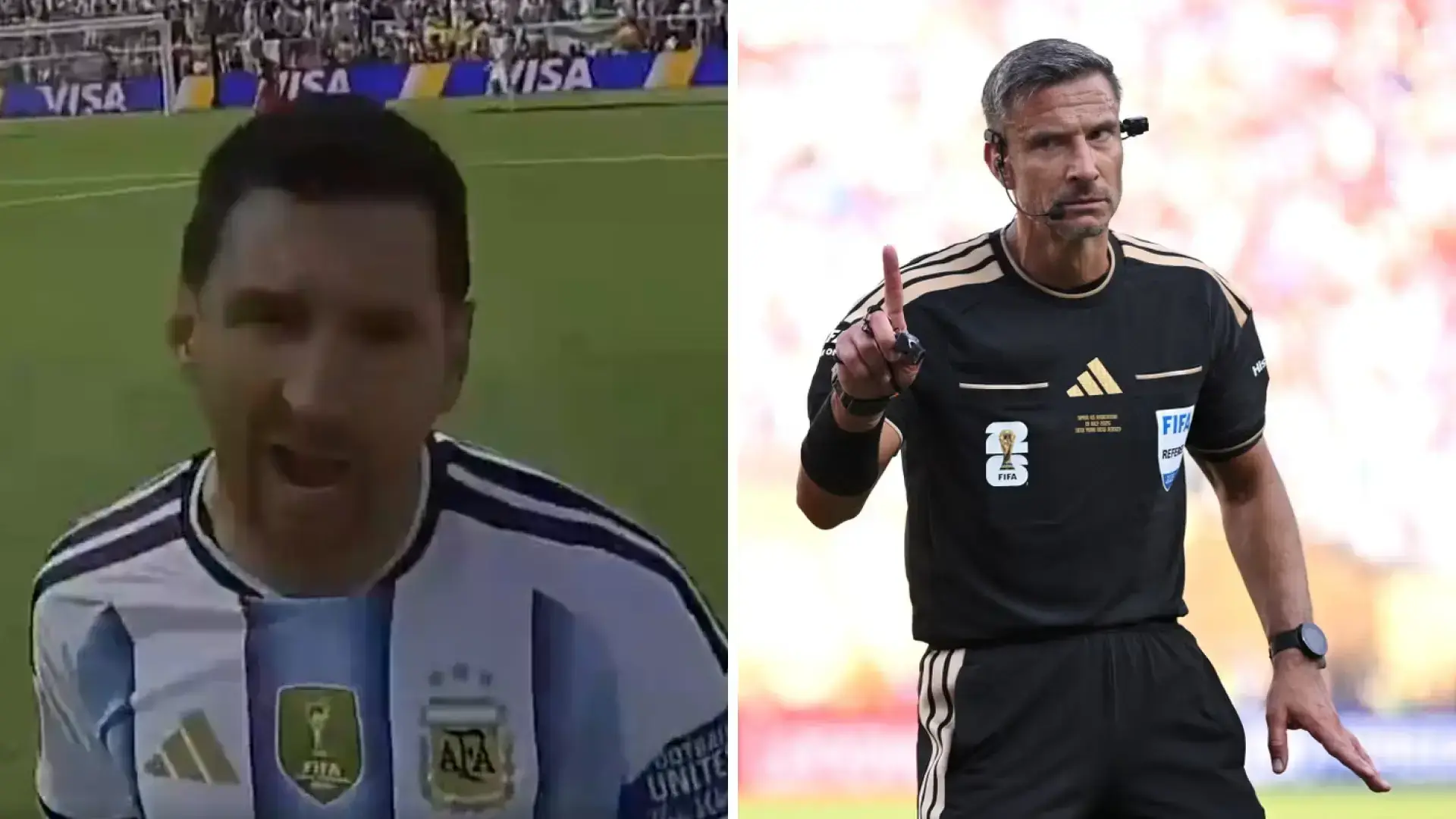


Late on the final night of August, Lionel Messi posted a handwritten letter on Instagram, sending shockwaves across the footballing world. Although the text was not long, every single sentence felt like heartfelt words shared only after prolonged and profound contemplation.
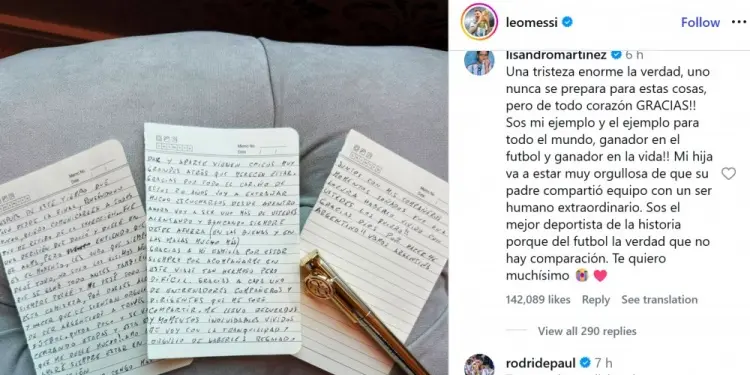
He stated that following the defeat in the 2026 World Cup final, he had deliberated for a long time and ultimately decided to retire from the Argentina national team. In the letter, he wrote: “This is a decision that broke my heart, and one that still aches today. I swear that I have always given everything—not only in recent years when we won it all, but long before that as well. I fought unreservedly for this Albiceleste shirt, to bring you joy through football, and to make you feel proud of being Argentine.”
However, “I have emptied myself, and I have nothing left to give.”
At the end of this handwritten letter, he added a concluding sentence: “These words were written on July 21, two days after the final. And today, following what happened to my father, I am even more certain of this than before.”
In truth, all of us can understand why Messi made such a decision at this moment. This summer, he had already lost far too much: first leading Argentina all the way to the 2026 World Cup final only to fall to Spain, and then on August 8, his 68-year-old father, Jorge, passed away.
The reason Messi waited until the final day of August to announce his international retirement was perhaps to allow himself time to process everything first, before telling the world in as calm a manner as possible and preparing for whatever may follow.
From 2005 to 2026, the Albiceleste shirt was worn by Messi for 21 years, and in this moment, he has finally bid farewell to it.
A Red Card and Swallowing Defeat from the Bench: The Beginning
The story of Messi and this Albiceleste shirt perhaps begins in Budapest.
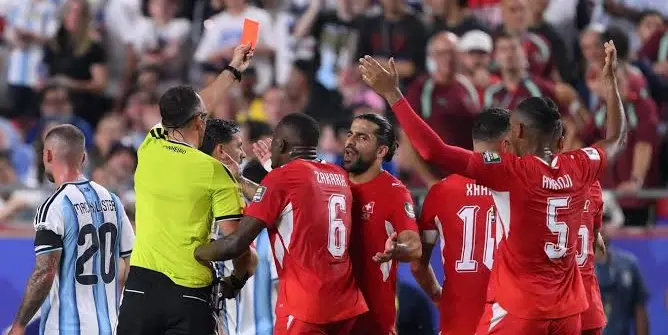
On August 17, 2005, an 18-year-old Messi donned the Argentina national team shirt for the very first time. Back then, he wore his hair long, possessed a slight frame, and had only just begun to emerge at Barcelona. In the match against Hungary, Messi came on as a second-half substitute. Just as everyone was eagerly anticipating a dazzling international debut from the wonderkid, Messi dealt them an unexpected twist: mere seconds after stepping onto the pitch, he caught an opponent with an elbow during a challenge and was shown a straight red card by the referee.
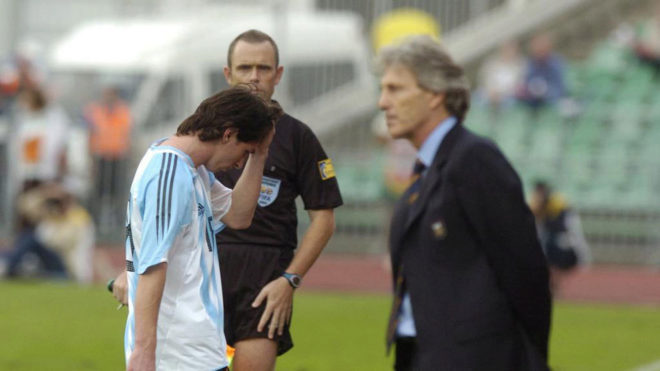
And so, Messi's international debut came to an abrupt and anticlimactic end.
If anyone back then had suggested that this teenager, sent off after just seconds on his debut, would go on to play 207 matches for Argentina, score 125 goals, feature in six World Cups, and hoist the World Cup trophy high above his head as captain, practically no fan would have believed it. Yet everything that unfolded afterward only reinforced the conviction: Messi was Argentina's next Diego Maradona.
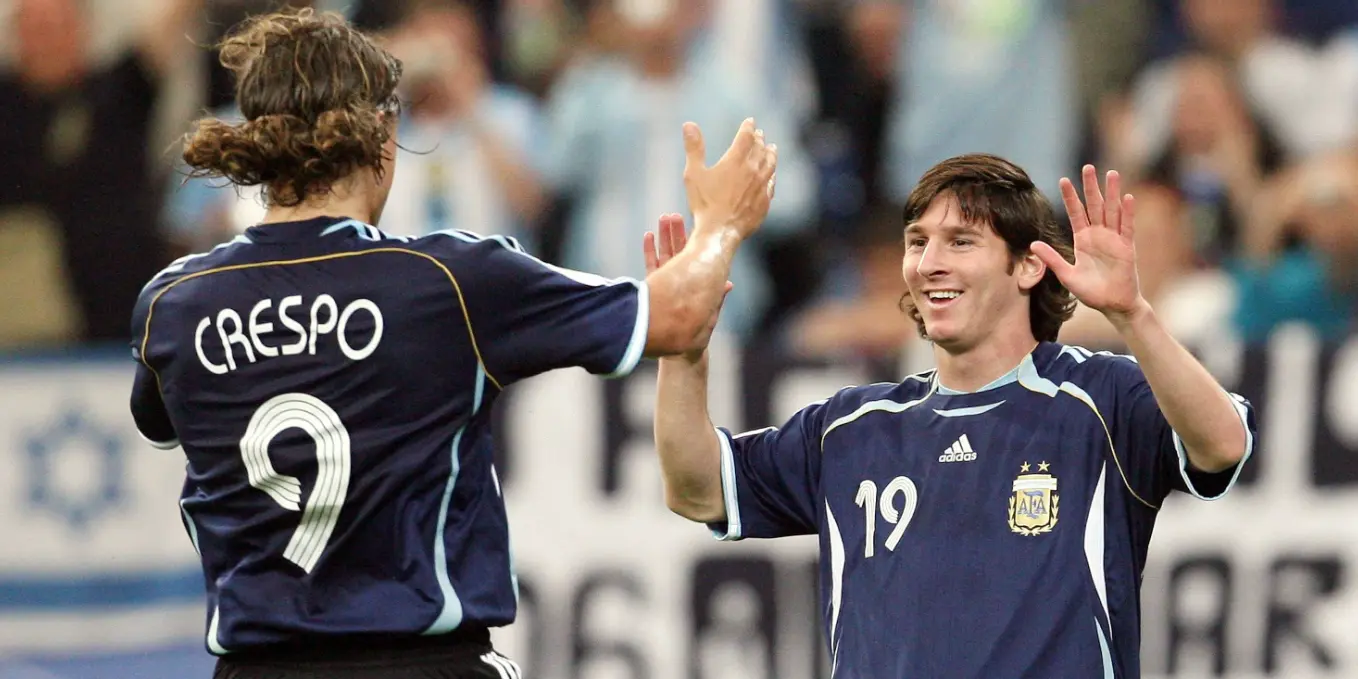
At the 2006 World Cup in Germany, a 19-year-old Messi was called up to the squad. Although established stars like Juan Román Riquelme, Hernán Crespo, and Carlos Tevez were the focal protagonists of Argentina at the time, Messi came off the bench in the 74th minute against Serbia and Montenegro to assist Crespo within four minutes, before scoring with a composed finish 14 minutes later. In less than 20 minutes on the pitch with a goal and an assist, Messi commanded the world's attention on the international stage for the first time, making everyone realize that he was the future standard-bearer of the Albiceleste.
Regrettably, Argentina were eliminated on penalties by Germany in the quarter-finals of that tournament, with Messi watching the entire contest unfold from the bench.
Nevertheless, the seed of hope had been firmly planted. At just 19 years old, he made everyone believe that his future in the Albiceleste shirt knew no bounds.
Six Years of Struggle: The Darkest Hours with the National Team
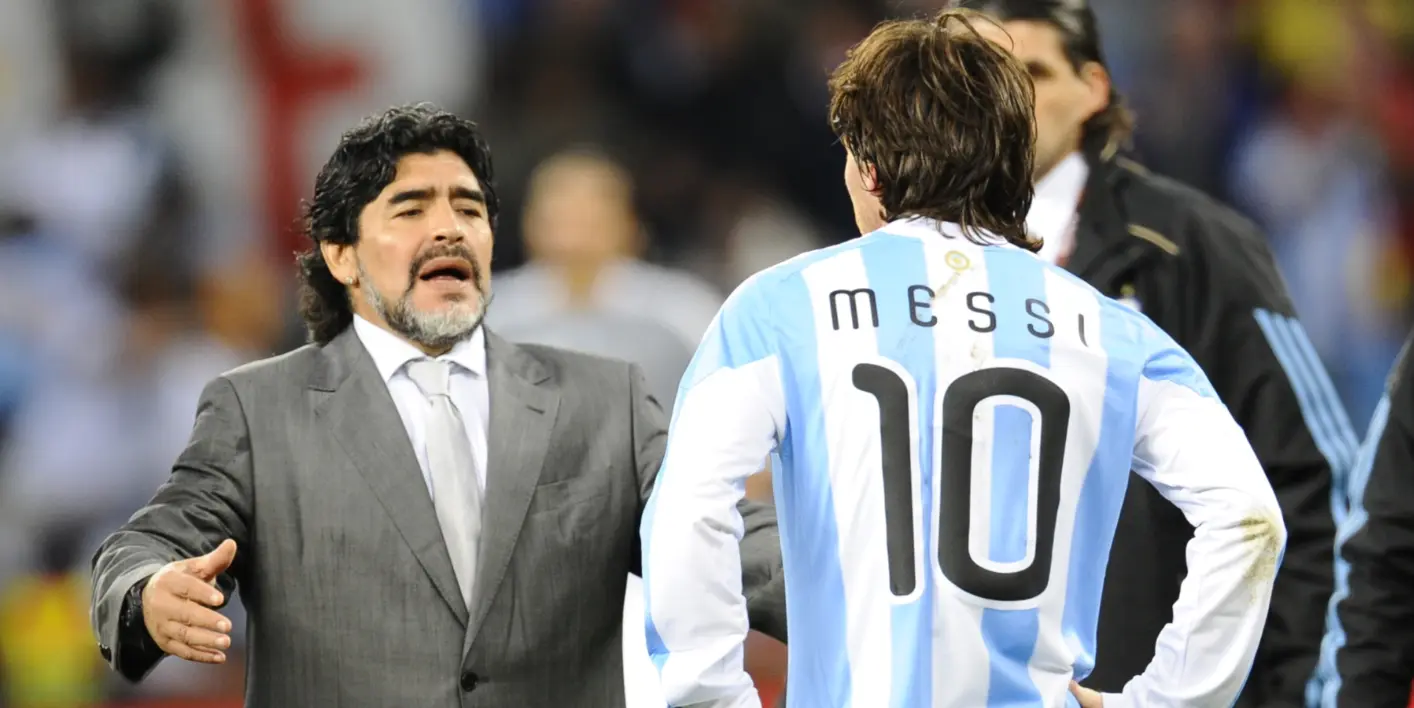
Four years later at the South Africa World Cup, Messi had already blossomed into a global superstar at Barcelona, and with Diego Maradona at the helm, expectations for Argentina reached fever pitch. However, this tournament became the only World Cup campaign of Messi's career in which he failed to score—registering zero goals in five matches as Argentina were dismantled 4-0 by Germany in the quarter-finals.
On the pitches of South Africa, Messi dropped deep constantly to collect possession, drive forward, shoot, and draw defenders away, doing immense legwork, but the decisive finishing touch always eluded him. At Barcelona, Xavi, Andrés Iniesta, and Sergio Busquets paved every path forward for him; but with the national team, Messi was thrust into the predicament of carrying the side as a lone talisman, forced to create everything from scratch with his bare hands. Yet the critics cared little for tactical context: five games without a goal prompted many to question Messi, claiming he was not "Argentine enough," criticizing him for moving to Spain so young, alleging he lacked passion in his speech, and pointing to his habit of looking down in defeat. The entire burden of the team's failures was heaped squarely upon his shoulders.
Another four years passed. This time in Brazil, across the South American continent, Messi stepped onto the pitch of a World Cup final for the first time.
During the group stage, he netted four crucial goals. In the round of 16 against Switzerland, he set up Ángel Di María for the extra-time winner—his stoppage-time screamer against Iran and brace against Nigeria remain iconic moments fondly remembered by fans. It is fair to say that in that tournament, Messi carried Argentina into the final through sheer individual brilliance.
The final took place at the Maracanã, and roughly 100,000 Argentine fans descended upon Rio de Janeiro on that fateful day. Had it not been for Mario Götze's extra-time winner, Messi would have achieved footballing immortality at the age of 27. Yet reality proved cruel: Götze's strike denied Messi the chance to lift the World Cup on South American soil, and the photograph of him staring wistfully at the trophy as he walked past became one of the most heartbreaking images in football history. Although he was awarded the Golden Ball for the tournament, he found no joy in it, because the prize he truly coveted had been so close, yet remained worlds away.
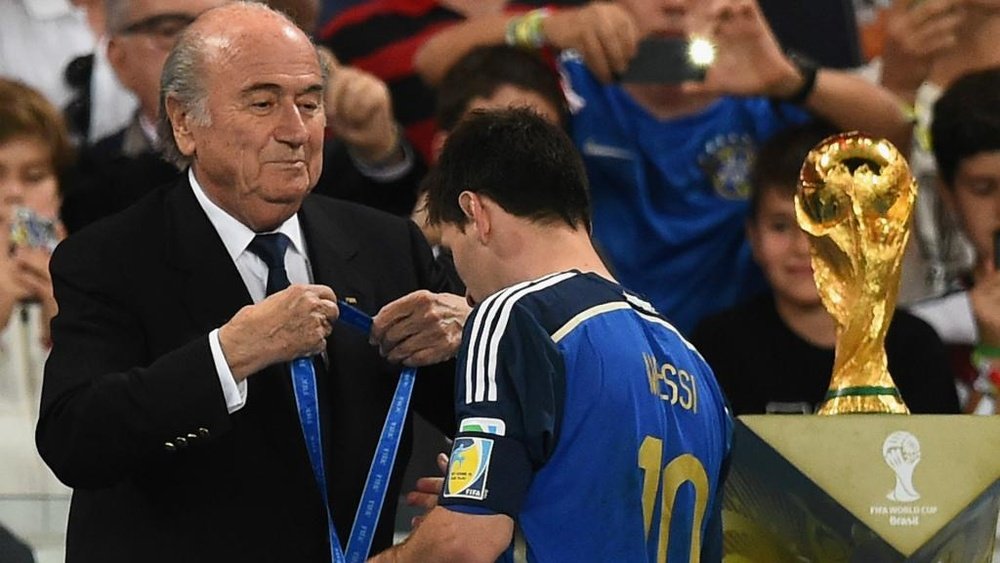
Later, Messi remarked: “We might never get an opportunity as good as this to win it in our lifetime.”
Years later, he still recalled waking up in the dead of night, haunted by the memory of that final defeat, unable to sleep.
In the 2015 Copa América final, Argentina lost to Chile.
In the 2016 Copa América Centenario final, Argentina fell to Chile once again.
This time, Messi missed his spot-kick in the penalty shootout. In tears after the match, he uttered the words that sent shockwaves through the football world: he was retiring from the national team.
Returning to the National Team: Becoming the True Leader
At that time, Messi was only 29 years old. At Barcelona, he had swept every possible honor—boasting Ballons d'Or, Champions League titles, and La Liga crowns. Yet with the Argentina national team, all he received was a recurring, piercing question: Why can't you bring a championship to Argentina like Maradona did?
Maradona himself once commented that Messi lacked personality and the character required of a true leader. It was a surprising critique, given that Maradona should have been the person who understood Messi's immense burden best, yet he delivered such an unsparing assessment.
Nevertheless, Messi's farewell to the national team lasted just 47 days.
Ultimately, Messi returned. Despite the scars, he could never abandon his beloved Albiceleste.
Faced with the choice between fighting and walking away, Messi's initial instinct had been to step aside and refocus on his club, where the Camp Nou offered more happiness and far less anguish. Yet the answer he ultimately submitted was to keep fighting, because the deepest voice in his heart told him that the blue and white could never be forsaken. Perhaps from that very moment, Messi redefined his role within the Argentina national team, transforming international glory into his ultimate obsession.
In 2018 in Russia, Messi captained the side, but things did not go smoothly as envisioned. Having stumbled through qualifying, the team suffered from tactical indecision, shifting lineups, and a tense dressing room atmosphere. Furthermore, opposing teams had spent years analyzing Messi, devising strategies to swarm and neutralize him. Consequently, the tournament proved extraordinarily grueling for both Messi and Argentina.
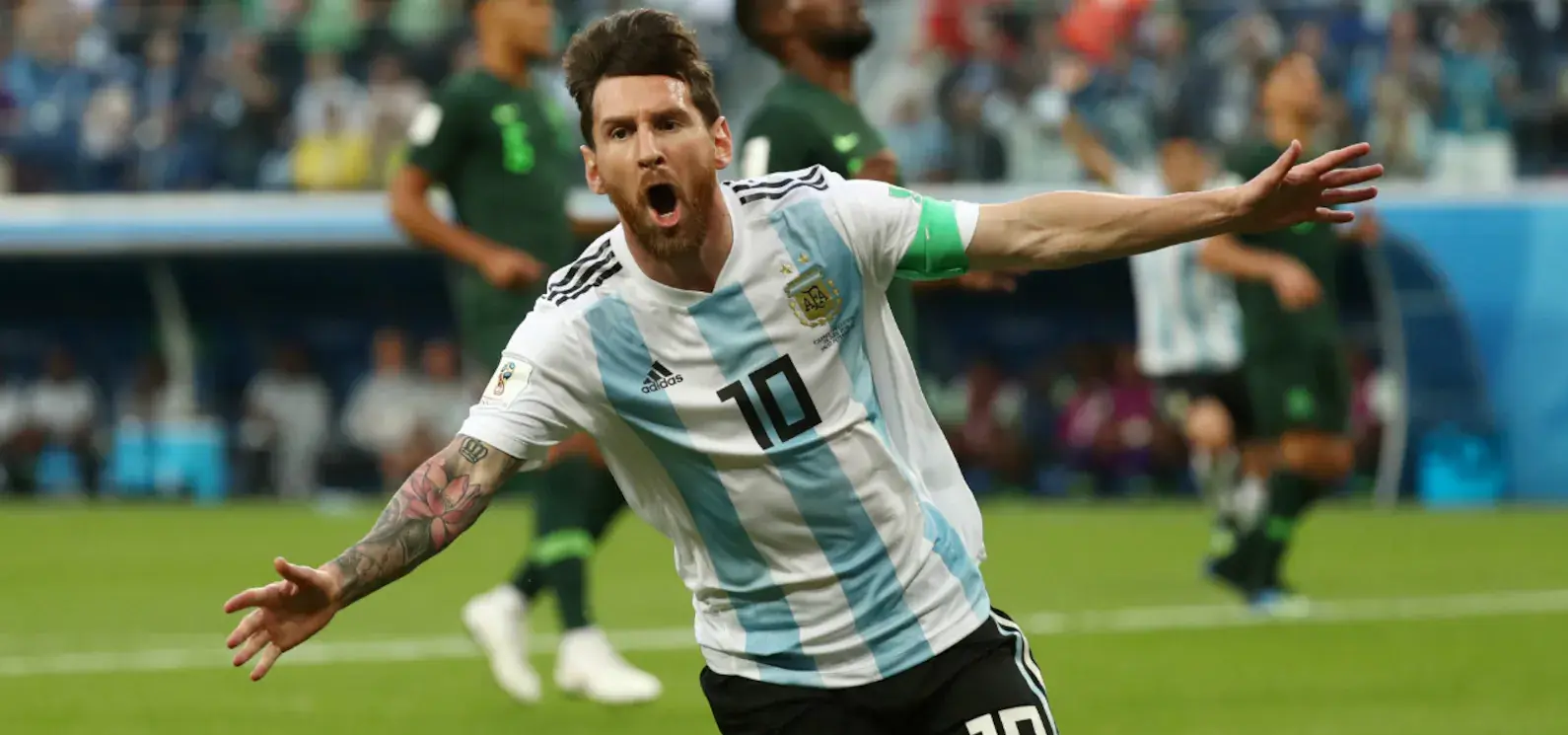
In the opener against Iceland, Messi missed a penalty; in the second match against Croatia, Argentina suffered a crushing 0-3 defeat. Fortunately, in the final group clash against Nigeria, Messi brought down a long pass with his thigh, controlled it with his foot, and fired home a brilliant strike to drag the team into the knockout stages. Yet, having exhausted their fortunes, Argentina faced eventual champions France in the round of 16. Even though Messi provided two assists, a dazzling young Kylian Mbappé stole the show, ending Argentina's campaign.
Following that match, many declared that the torch had been passed, that every era yields its champions, and that Mbappé's time had arrived.
Yet Messi refused to resign himself to fate. He had no intention of surrendering his mantle without a fight—he wanted to try once more.
The Dream Realized in Qatar
Four years later in Qatar, Messi finally achieved his dream.
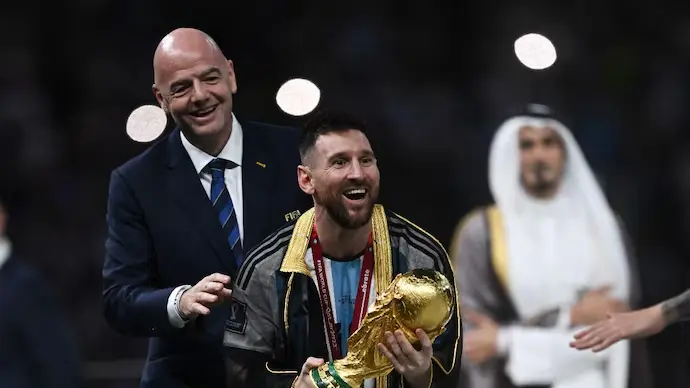
He led the team all the way to the end, ultimately lifting the World Cup trophy that the Argentine people had waited 36 years for at the Lusail Stadium. For Messi, the journey from being sent off seconds into his 2005 debut to hoisting the World Cup in Qatar took an arduous 17 years. In that glorious moment, he laughed, he wept, he embraced his teammates, and he kissed the trophy. The man once questioned for not being "Argentine enough" had carried Argentina on his shoulders to the pinnacle, lifting the nation and the World Cup above his head.
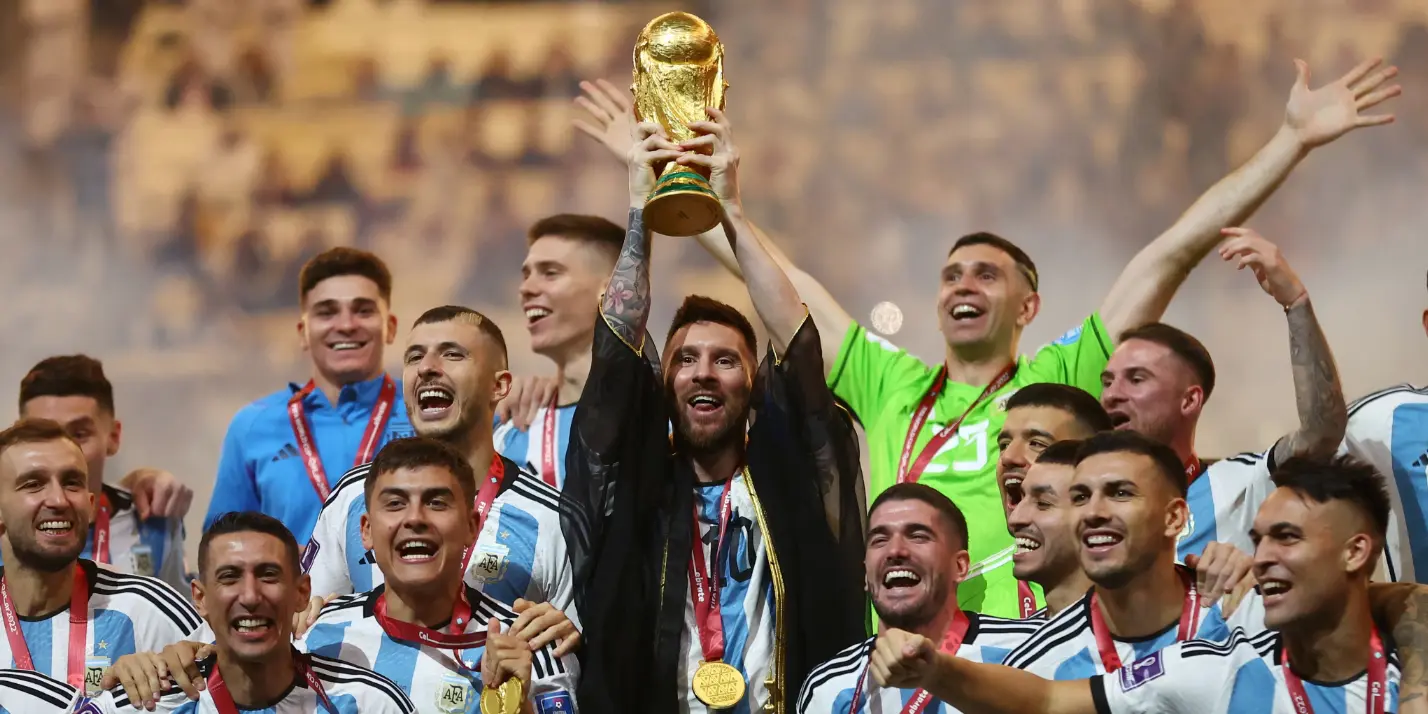
The 2021 Copa América, the 2022 World Cup, and the 2024 Copa América—three consecutive major international trophies—completely washed away the shadows of Messi's international past, eclipsing years of heartbreak with sheer triumphs.
The 2026 World Cup: A Tournament That Almost Belonged to Messi
Fast forward to 2026, and a 39-year-old Messi featured in his sixth World Cup with Argentina.
Although few held lofty expectations for a 39-year-old veteran, with many assuming the 2026 World Cup would serve as the coronation stage for the younger generation led by Erling Haaland and Kylian Mbappé, Messi showed the world that even 38-year-old veterans can be as strong as young players. In the opening match against Algeria, Messi scored a sensational hat-trick—the first World Cup hat-trick of his career—equaling Miroslav Klose's all-time World Cup scoring record and becoming the oldest player ever to net a hat-trick in World Cup history.
Across eight World Cup fixtures that summer, Messi registered eight goals and four assists, topping the statistical charts in shots, successful dribbles, and chances created. In the race for the Golden Boot, he finished just behind Mbappé, and in the Golden Ball voting, he trailed only Rodri.
In the quarter-finals, Argentina navigated a grueling extra-time clash. In the semi-final against England, with Argentina trailing 0-1, Messi took full command of the match as if awakened—prompting Thierry Henry to marvel from the commentary booth: "You look in his eyes; he flipped a switch. He started getting on the ball, dribbling past almost everyone, trying to change the game." Ultimately, Messi provided assists for Enzo Fernández and Lautaro Martínez to seal a dramatic comeback.
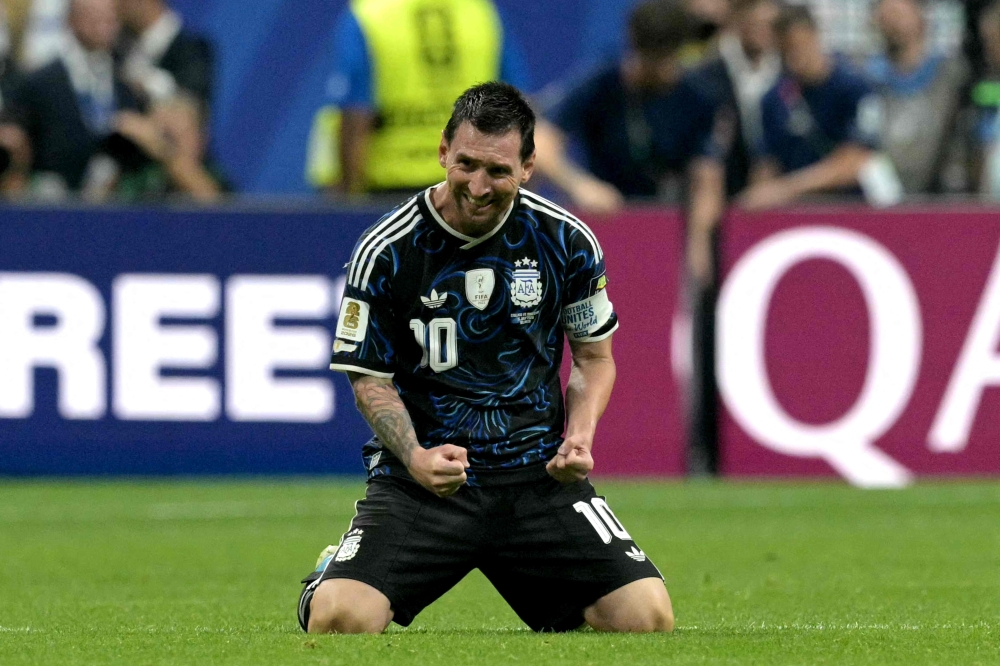
Then came the final at MetLife Stadium against Spain. Argentina managed just two shots across 120 minutes, one of which came from Messi and was blocked. Ferran Torres struck the decisive goal in the 106th minute, denying Argentina a successful title defense. Messi wept as he received his runners-up medal, knowing all too well that this was his final World Cup match.
As he walked off the pitch, every single step was imbued with sorrow.
After the Exit: Choosing to Bow Out at the Pinnacle
He spent over a month processing everything in solitude, during which he also endured the grief of losing his father. Then, he finally uttered those definitive words.
207 appearances, 125 goals, 68 assists.
All-time leader in appearances, goals, and assists in Argentina's history.
Most appearances in World Cup history (34 matches), most assists (12), and most direct goal contributions (33). Six World Cup appearances, tied with Cristiano Ronaldo for the most in history.
One World Cup championship, two World Cup runners-up finishes. Two Copa América titles, one Finalissima trophy, and an Olympic gold medal. Two World Cup Golden Balls (2014 and 2022), making him the only player in history to win the award twice. Eight Ballons d'Or, the most in history.
While statistical records will inevitably be rewritten by future generations, Messi was never chasing numbers. As he wrote in his farewell letter, his greatest aspiration was always to bring joy to the Argentine people and make everyone proud of the national team. He left everything he had to give with that team, and behind him stands a gifted generation of young players who deserve opportunities of their own. From now on, he will support the team from the outside just like any ordinary Argentine—cheering them on in victory, and standing by them in defeat.
Therefore, what Messi truly cherishes and hates to part with was never the records, but the Albiceleste shirt that accompanied him for 21 years.
From that bewildering red card in Budapest in 2005 to that heartbreaking extra-time defeat in New York in 2026, twenty-one years have passed. He transformed from a bewildered teenager sent off on his debut into an indelible monument in the history of Argentine football.
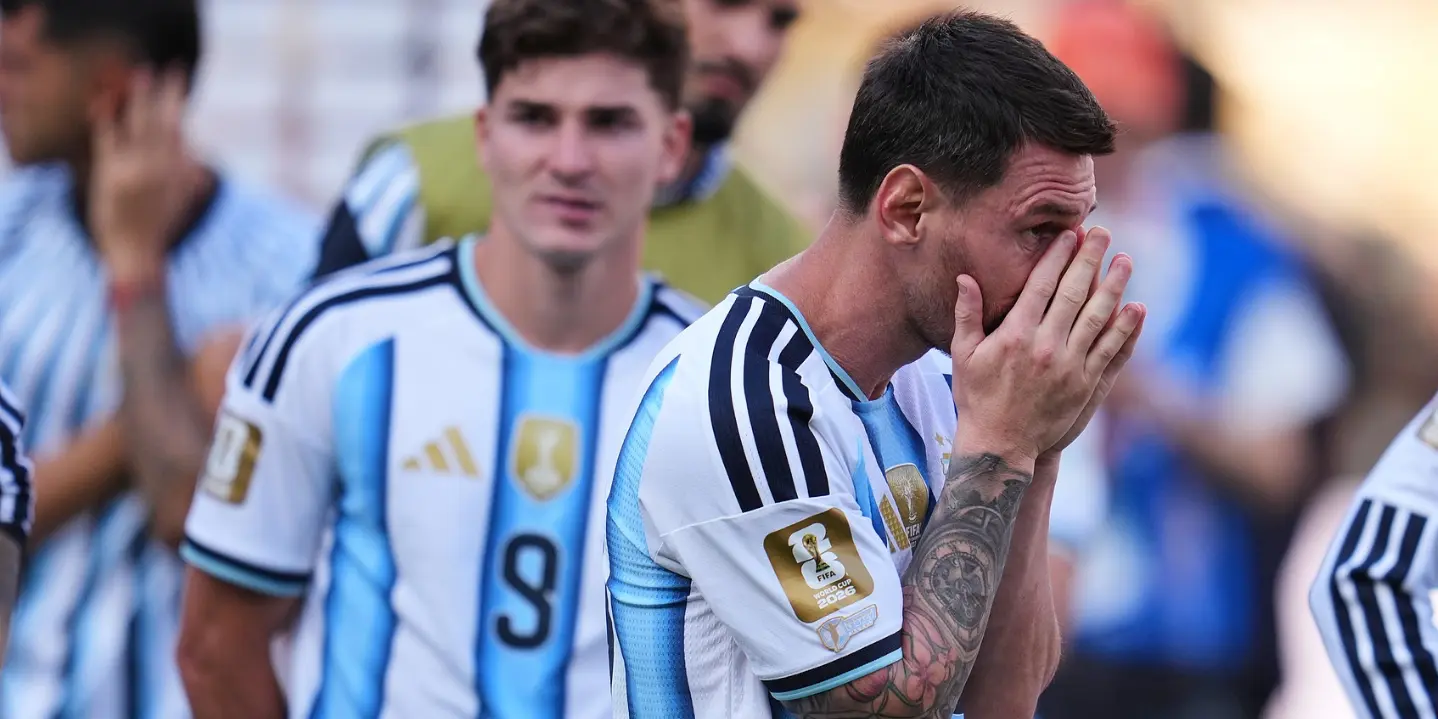
He suffered defeats, shed tears, announced his departure, and returned. He was questioned by Argentine supporters, and he was lifted high above their shoulders in triumph.
He said that as he walks away, his heart is at peace and filled with pride, because alongside his teammates, he gifted the Argentine people moments they once only dared to dream of.
At the conclusion of that chapter, he wrote: “Thank God for making me Argentine.”
And to honor that single sentence, he gave twenty-one years of his life, ultimately "emptying himself."