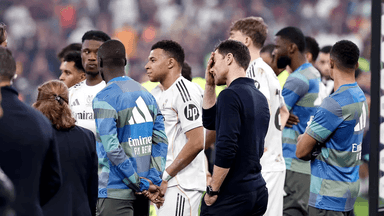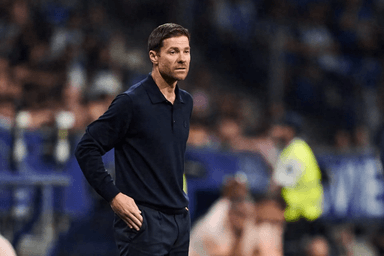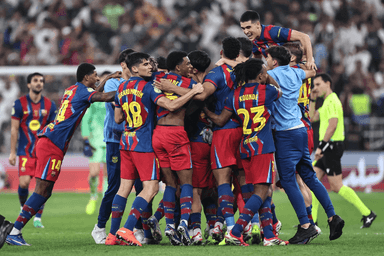

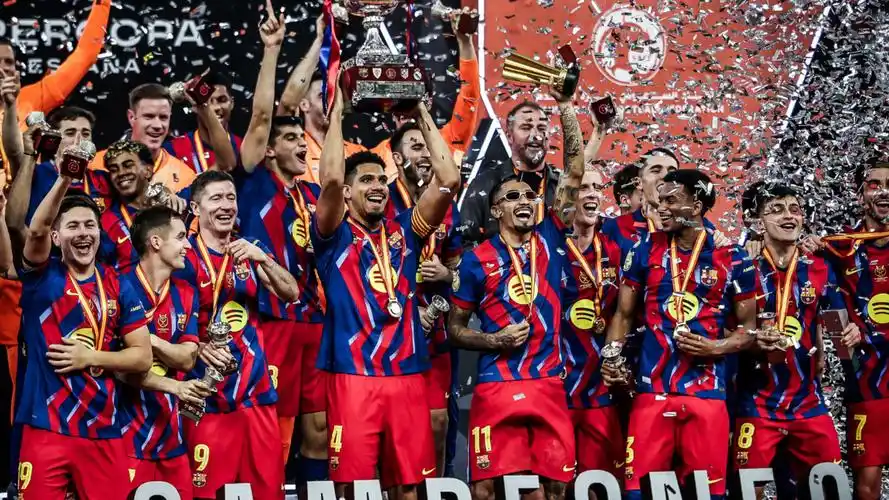
Barcelona defeated Real Madrid 3-2 to claim the trophy in the Spanish Super Cup final.After the match, manager Xabi Alonso spoke to Camel Live in an interview.
Multiple key refereeing decisions sparked heated discussions in the Spanish Super Cup final. After the match, a former La Liga referee, who serves as a referee expert for Camel Live, conducted a detailed analysis of the on-field official’s performance, arguing that there was an obvious time management issue in the closing stages of the game.
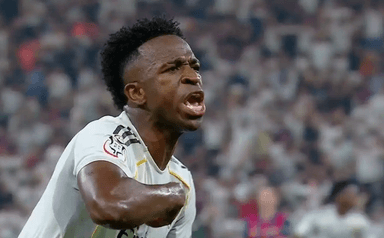
The most controversial 2-2 equalizer from a corner kick should not have been allowed to be taken. Initially, only 3 minutes of stoppage time were added in the second half, but goals from Vinícius Júnior and Robert Lewandowski were scored during this period, which should have led to additional stoppage time in accordance with the rules. He opined that the stoppage time should have been extended to 5 minutes, yet the corner kick was taken in the 6th minute of stoppage time—a minute that was not supposed to be added. “The match should have concluded as soon as the 5 minutes of stoppage time elapsed.”
Vinícius’ goal was scored at the 46th minute and 7th second of the second half. From that moment on, an extra 1 minute of stoppage time should have been added, bringing the total stoppage time to 4 minutes. On this premise, Lewandowski’s goal at the 48th minute and 24th second was still within the legally permitted match time. Barcelona sealed the comeback win with 36 seconds remaining in stoppage time, and the goal itself was free of any controversy. The only real dispute centered on the subsequent corner kick that led to the 2-2 equalizer.
Beyond time management, there were also multiple controversies over the consistency of refereeing decisions. In the 22nd minute, Carreras was clearly a step late in a midfield tackle and directly stepped on Yamal’s instep. The on-field referee only awarded a foul without showing a yellow card. Iturralde believed this was a "very clear yellow card" and labeled it a referee error.
He explained, "This was a heavy challenge... He stepped on the opponent when he had already missed the chance to win the ball; it was an obvious yellow card." As for why no yellow card was shown, he added, "In such high-stakes matches, referees tend to adopt a conservative approach, especially when the score is still 0-0." Barcelona players fiercely protested the decision, but the matter did not escalate further.
In the 56th minute, another key refereeing call triggered debate. During a Barcelona counterattack, Asensio brought down Pedri from behind and was only booked with a yellow card. The foul was borderline red card territory. "If the referee had shown a straight red card on the spot, no one could have argued against it." He pointed out that the tackle had no possibility of touching the ball and was a challenge from behind. Although it was not a situation that required VAR intervention, a straight red card decision from the on-field referee would have had to be accepted.
Regarding the red card decision in the 90th minute, De Jong made a tackle on Mbappé with his studs directly hitting the latter’s shin. Initially, it seemed like a yellow card on the pitch, but replays showed the tackle was clearly high and dangerous. He deemed it a "foul with raised foot, exposed studs, and no attempt to pull out of the challenge," stating that the referee’s red card decision was completely correct. Iturralde added that under current rules, this red card will result in a suspension for the player’s next league or cup match.