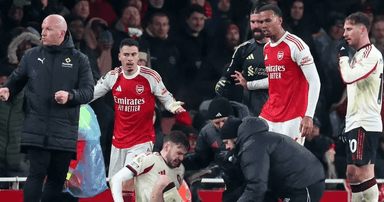

Media outlets have stated that Arsenal’s youth academy has nurtured several impressive players in recent years, and the soaring transfer value of these talents is expected to bring substantial financial gains to the club in the future.

Media reported that if Ethan Nwaneri or Lewis-Skelly leave the club, Arsenal could potentially earn up to £139 million in future transfer deals. To date, Nwaneri has made 50 first-team appearances and scored 10 goals. Scally, on the other hand, has featured in 61 games and netted once—a strike in the 5-1 thrashing of Manchester City, during which Nwaneri also found the back of the net at the Emirates Stadium.
As both players are still in their developmental stages, their transfer market valuations keep rising. This provides Arsenal with an opportunity to significantly boost profits and meet sustainability report compliance requirements by cashing in on them if necessary.
In the club’s financial accounts, proceeds from selling homegrown players can be recorded as "pure profit" since no initial transfer fee was paid to sign them. Arsenal has previous experience in this regard, with the sales of homegrown talents such as Folarin Balogun, Emile Smith Rowe and Eddie Nketiah all strengthening the club’s financial position.
Both youngsters have been named in the latest "Top 100 Global Transfer Values" list released by the CIES Football Observatory. Lewis-Skelly ranks 51st with a valuation of £73.5 million, while Nwaneri’s worth has climbed to £65.6 million, placing him 62nd. Although their playing time has decreased this season, the recent injuries to Riccardo Calafiori and Piero Hincapié mean the 19-year-old Scally is likely to get a prolonged run in the first team.
Regarding Nwaneri, there have been recent rumors of a January loan move, with Bournemouth said to be interested. However, Mikel Arteta’s detailed comments on Nwaneri recently indicate that he has no plans to let the youngster leave.
Arteta said: "He is a talent with the right attitude, surrounded by the right players and environment. We need to ensure his development progresses step by step at the correct pace and in the right order."